

Hey there! As a supplier of sandwich panel mineral wool, I often get asked whether this stuff can be cut easily. So, I thought I'd share my insights on this topic.
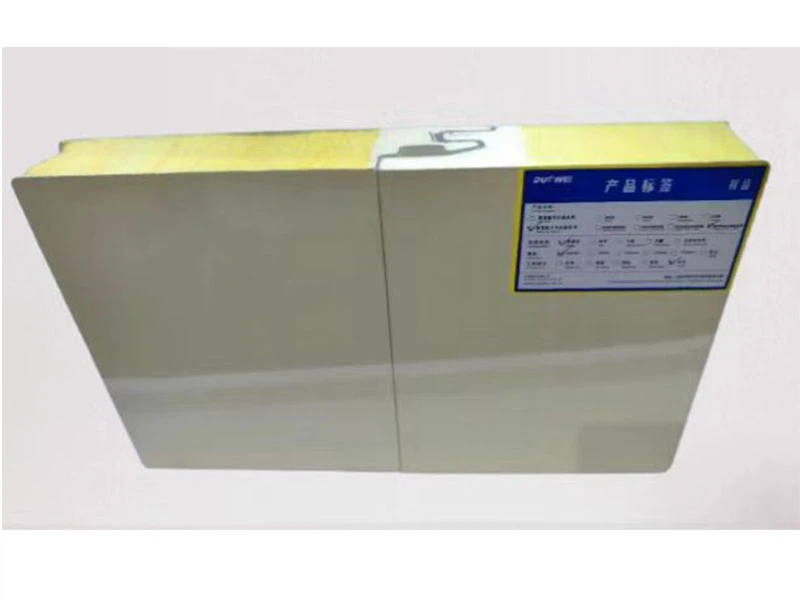
First off, let's talk a bit about what sandwich panel mineral wool is. It's a popular choice for insulation in buildings, especially in walls and roofs. Mineral wool is made from natural or synthetic minerals, and it's known for its excellent thermal and acoustic insulation properties. The sandwich panel consists of two outer metal sheets with a layer of mineral wool insulation in the middle.
Now, to the big question: Can it be cut easily? The answer is, it depends. Mineral wool itself is relatively easy to cut compared to some other insulation materials. It's a fibrous material, and with the right tools, you can make clean cuts.

One of the most common tools for cutting mineral wool is a utility knife. A sharp utility knife with a fresh blade can do the job quite well. You just need to score the surface of the mineral wool and then snap it along the scored line. This method works great for straight cuts and is suitable for small - scale projects or when you need to make quick adjustments.
For larger projects or more precise cuts, a power saw can be a better option. A reciprocating saw or a circular saw with a fine - tooth blade can cut through the mineral wool efficiently. However, when using a power saw, you need to be careful because the mineral wool fibers can become airborne. It's important to wear appropriate safety gear, like a dust mask and goggles, to protect yourself from inhaling the fibers.
Another factor that affects how easily sandwich panel mineral wool can be cut is the thickness of the panel. Thinner panels are generally easier to cut than thicker ones. A thin layer of mineral wool in a sandwich panel can be sliced through quickly with a utility knife, while a thicker panel might require more effort and a more powerful cutting tool.
The density of the mineral wool also plays a role. Higher - density mineral wool is more compact and can be a bit more challenging to cut. It might require a sharper blade or a more powerful saw to make a clean cut. But on the flip side, higher - density mineral wool often provides better insulation performance.
When it comes to the edges of the sandwich panel, you need to be extra careful. The outer metal sheets can be cut with tin snips or a metal - cutting saw. But you have to make sure that the cut is straight and clean so that the panel can be installed properly. If the edges are rough or uneven, it can affect the overall look and functionality of the installation.
Now, let me tell you about some of the products we offer. We have the Fire Resistance Rock Wool Mineral Wool Sandwich Panel. This panel is not only great for insulation but also has excellent fire - resistance properties. It can be cut to fit different installation requirements, whether you're building a commercial building or a residential one.
We also have the Insulated Metal PIR PU Foam Sandwich Panel. While this is not a mineral wool panel, it's another popular option for insulation. It has its own cutting requirements, but we can provide guidance on how to cut it properly.
And for those looking for an alternative, our Glass Wool Sandwich Panel for Wall is a great choice. Glass wool is also relatively easy to cut, similar to mineral wool, and it offers good insulation performance.
In conclusion, sandwich panel mineral wool can be cut easily with the right tools and techniques. Whether you're a DIY enthusiast or a professional contractor, you can handle the cutting process with a bit of practice. If you're planning a project that involves sandwich panel mineral wool, we're here to help. We can provide you with the best products and advice on cutting and installation.
If you're interested in purchasing our sandwich panel mineral wool or any of our other products, we'd love to have a chat with you. Contact us to start a procurement discussion, and we'll work together to meet your project needs.
References
- Building Insulation Handbook, 3rd Edition
- Insulation Materials: Properties and Applications, 2nd Edition