

As a supplier of glass wool sandwich panels, I understand the importance of ensuring the performance of these products. Glass wool sandwich panels are widely used in various construction projects due to their excellent insulation, lightweight, and fire-resistant properties. However, to guarantee that these panels meet the required standards and perform optimally, thorough performance testing is essential. In this blog post, I will share some key methods and considerations for testing the performance of glass wool sandwich panels.
Thermal Insulation Testing
One of the primary functions of glass wool sandwich panels is to provide thermal insulation. Effective thermal insulation helps in reducing energy consumption by maintaining a stable indoor temperature. To test the thermal insulation performance of glass wool sandwich panels, we commonly use the guarded hot plate method or the heat flow meter method.
The guarded hot plate method is considered the most accurate way to measure thermal conductivity. In this test, a sample of the glass wool sandwich panel is placed between a heated plate and a cooled plate. The heat flow through the sample is measured under steady-state conditions. By knowing the temperature difference across the sample and the heat flow rate, the thermal conductivity of the panel can be calculated using Fourier's law of heat conduction.
The heat flow meter method is a quicker and more practical alternative for field testing. It involves placing a heat flow sensor on one side of the panel and measuring the heat flow through the panel. The temperature difference across the panel is also measured, and the thermal conductivity is then determined based on the heat flow and temperature data.
Fire Resistance Testing
Fire resistance is another critical aspect of glass wool sandwich panels, especially in buildings where fire safety is a major concern. To test the fire resistance of these panels, we typically follow standards such as ASTM E119 or ISO 834.
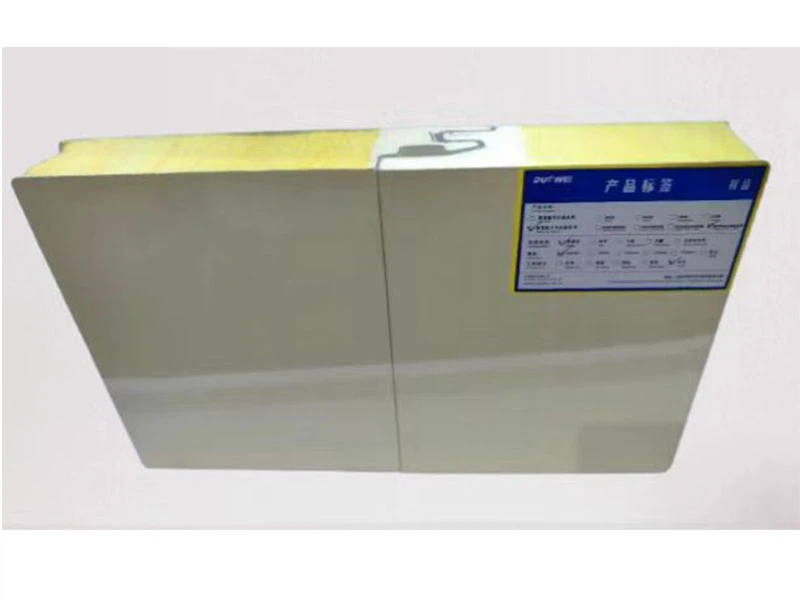

In a fire resistance test, a sample of the glass wool sandwich panel is exposed to a controlled fire in a furnace. The test measures the time it takes for the panel to lose its integrity (i.e., develop holes or cracks that allow the passage of flames or hot gases), insulation (i.e., the temperature on the unexposed side of the panel exceeds a specified limit), and load-bearing capacity (if applicable). Based on the test results, the panel is assigned a fire resistance rating, such as 30 minutes, 60 minutes, or 120 minutes.
Glass wool is known for its excellent fire-resistant properties, as it is non-combustible and can withstand high temperatures without melting or releasing toxic gases. However, the overall fire resistance of the sandwich panel also depends on other factors, such as the type of facing material used and the quality of the panel's construction.
Mechanical Performance Testing
Mechanical performance testing is necessary to ensure that the glass wool sandwich panels can withstand the loads and stresses they will encounter during installation and use. Some of the common mechanical tests include compression strength testing, flexural strength testing, and shear strength testing.
Compression strength testing involves applying a gradually increasing compressive load to a sample of the panel until it fails. The maximum load the panel can withstand before failure is recorded as its compression strength. This test is important to ensure that the panel can support the weight of the building structure and any additional loads, such as snow or wind.
Flexural strength testing measures the ability of the panel to resist bending. A sample of the panel is placed on two supports and a load is applied at the center of the panel until it breaks. The flexural strength is calculated based on the maximum load and the dimensions of the sample.
Shear strength testing evaluates the panel's resistance to shear forces. A sample of the panel is subjected to a shear load, and the shear strength is determined based on the maximum shear force the panel can withstand before failure.
Sound Insulation Testing
Sound insulation is an important consideration for glass wool sandwich panels, especially in buildings where noise reduction is required, such as offices, hospitals, and schools. To test the sound insulation performance of these panels, we use the sound transmission loss test.
In a sound transmission loss test, a sample of the panel is installed in a soundproof chamber between two rooms. A sound source is placed in one room, and the sound pressure levels in both rooms are measured. The difference in sound pressure levels between the two rooms is the sound transmission loss, which indicates how well the panel can block the passage of sound. The test is typically conducted at different frequencies to obtain a sound transmission loss curve for the panel.
Water Resistance Testing
Water resistance is crucial for glass wool sandwich panels, as moisture can degrade the insulation performance and structural integrity of the panels over time. To test the water resistance of these panels, we can conduct a water absorption test and a water vapor permeability test.
In a water absorption test, a sample of the panel is immersed in water for a specified period, usually 24 hours. After the immersion, the panel is removed from the water, surface-dried, and weighed. The increase in weight is then calculated as a percentage of the original weight of the panel, which indicates the water absorption rate of the panel.
The water vapor permeability test measures the ability of the panel to allow water vapor to pass through it. A sample of the panel is placed in a test chamber with a controlled humidity gradient, and the rate of water vapor transmission through the panel is measured. The water vapor permeability is then calculated based on the water vapor transmission rate and the humidity difference across the panel.
Quality Control and Assurance
In addition to the above performance tests, it is also important to implement a comprehensive quality control and assurance program to ensure the consistent performance of glass wool sandwich panels. This includes inspecting the raw materials used in the production of the panels, monitoring the manufacturing process, and conducting regular in-house testing of finished products.
At our company, we source high-quality glass wool and facing materials from reliable suppliers. We have strict quality control measures in place during the manufacturing process to ensure that each panel meets our specifications. Before shipping the panels to our customers, we conduct a final inspection and testing to verify their performance.
Conclusion
Testing the performance of glass wool sandwich panels is essential to ensure that they meet the required standards and perform optimally in various applications. By conducting thermal insulation, fire resistance, mechanical performance, sound insulation, and water resistance tests, we can accurately evaluate the quality and performance of these panels.
If you are interested in Fire Resistance Rock Wool Mineral Wool Sandwich Panel, Glass Wool Sandwich Panel for Wall, or Fire Rated Rock Wool Sandwich Panel Mineral Wool with PIR Side Sealing, please feel free to contact us for more information. We are committed to providing high-quality glass wool sandwich panels that meet your specific needs and requirements.
References
- ASTM International. (2023). ASTM E119 - Standard Test Methods for Fire Tests of Building Construction and Materials.
- ISO. (2023). ISO 834 - Fire-resistance tests - Elements of building construction.
- ASHRAE. (2023). Handbook of Fundamentals. American Society of Heating, Refrigerating and Air-Conditioning Engineers.