

In the realm of modern construction, the choice of building materials plays a pivotal role in determining a building's overall performance, including its weight. Among the various materials available, sandwich panel mineral wool has emerged as a popular option for many construction projects. As a supplier of sandwich panel mineral wool, I am well - versed in its properties and how it impacts a building's weight. In this blog, we will delve into the factors that influence how sandwich panel mineral wool affects the building's overall weight.
Composition and Structure of Sandwich Panel Mineral Wool
A sandwich panel typically consists of two outer layers, often made of metal sheets such as steel or aluminum, and a core material in between. In the case of mineral wool sandwich panels, the core is made of mineral wool. Mineral wool is produced from natural minerals like basalt or diabase, which are melted at high temperatures and then spun into fine fibers.
The outer metal layers provide structural strength and durability, while the mineral wool core offers excellent insulation, fire resistance, and soundproofing properties. The combination of these materials creates a composite panel that is lightweight yet strong.
Weight Characteristics of Mineral Wool
Mineral wool itself is relatively lightweight. Its density can vary depending on the manufacturing process and the intended application. Generally, the density of mineral wool used in sandwich panels ranges from 40 kg/m³ to 200 kg/m³. Compared to other common building materials such as concrete (with a density of around 2400 kg/m³) or brick (density around 1600 - 2000 kg/m³), mineral wool is significantly lighter.
This low density of mineral wool means that when used as the core material in a sandwich panel, it contributes relatively little to the overall weight of the panel. For example, a 100 - mm thick mineral wool core with a density of 100 kg/m³ will add only 10 kg of weight per square meter of the panel.
Impact on Building Weight
When considering the impact of sandwich panel mineral wool on a building's overall weight, several aspects need to be taken into account.
Reduction in Structural Load
One of the most significant advantages of using sandwich panel mineral wool is the reduction in the structural load of the building. Since the panels are lightweight, the foundation and structural framework of the building do not need to be as massive as they would be if heavier materials were used. This can lead to substantial savings in construction costs, as less material is required for the foundation and structural elements.
For multi - story buildings, the use of lightweight sandwich panels can also reduce the load on the lower floors. This allows for more flexible design options and potentially higher building heights without overloading the structure.
Ease of Installation
The lightweight nature of sandwich panel mineral wool also makes it easier to install. Workers can handle the panels more easily, which can reduce the time and labor required for installation. This not only speeds up the construction process but also reduces the risk of injuries on the construction site.
Transportation and Handling
During transportation, the low weight of sandwich panel mineral wool means that less fuel is required to move the panels from the manufacturing facility to the construction site. This is not only cost - effective but also more environmentally friendly. Additionally, the reduced weight makes it easier to handle the panels during loading, unloading, and storage.
Comparison with Other Sandwich Panel Core Materials
To better understand the impact of sandwich panel mineral wool on building weight, it is useful to compare it with other common sandwich panel core materials.
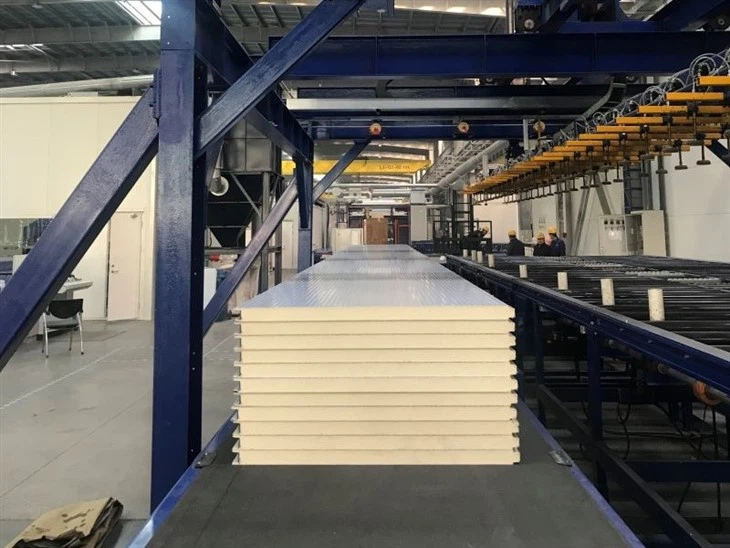
Insulated Metal PIR PU Foam Sandwich Panel
Insulated Metal PIR PU Foam Sandwich Panel uses polyisocyanurate (PIR) or polyurethane (PU) foam as the core material. These foams are also lightweight, with densities typically ranging from 30 kg/m³ to 50 kg/m³. While they are slightly lighter than mineral wool, they may not offer the same level of fire resistance.
In terms of overall panel weight, the difference between mineral wool and PIR/PU foam sandwich panels is relatively small. However, when fire safety is a major concern, mineral wool may be the preferred choice despite its slightly higher weight.
Fire Rated Rock Wool Sandwich Panel Mineral Wool with PIR Side Sealing
Fire Rated Rock Wool Sandwich Panel Mineral Wool with PIR Side Sealing combines the fire - resistant properties of mineral wool with the additional sealing provided by PIR. This type of panel offers enhanced performance in terms of both fire resistance and airtightness.
The addition of PIR side sealing does add a small amount of weight to the panel, but the overall weight is still relatively low compared to many other building materials. The benefits of improved fire safety and energy efficiency often outweigh the minor increase in weight.

Design Considerations for Weight Optimization
When using sandwich panel mineral wool in a building project, there are several design considerations that can help optimize the building's weight.
Panel Thickness
The thickness of the sandwich panel can be adjusted based on the specific requirements of the building. A thicker panel may provide better insulation but will also add more weight. By carefully calculating the insulation needs, designers can choose the optimal panel thickness to balance insulation performance and weight.
Panel Size
The size of the sandwich panels can also affect the building's weight. Larger panels may require fewer joints, which can reduce the overall weight of the panel system. However, larger panels may also be more difficult to handle and transport. Designers need to find the right balance between panel size, weight, and ease of installation.
Structural Integration
Proper integration of the sandwich panels with the building's structural system is crucial for weight optimization. By designing the structure to support the panels effectively, the overall weight of the building can be minimized. For example, using a lightweight steel frame in combination with sandwich panel mineral wool can create a highly efficient and lightweight building structure.
Conclusion
In conclusion, sandwich panel mineral wool has a significant and positive impact on a building's overall weight. Its low - density core material reduces the structural load, makes installation easier, and offers advantages in transportation and handling. When compared to other sandwich panel core materials, mineral wool provides a good balance between weight, performance, and cost, especially when fire resistance is a key requirement.
As a supplier of sandwich panel mineral wool, I am committed to providing high - quality products that meet the diverse needs of construction projects. Our Fire Resistance Rock Wool Mineral Wool Sandwich Panel offers excellent fire resistance and insulation properties while keeping the weight of the building in check.
If you are involved in a construction project and are considering using sandwich panel mineral wool, I encourage you to contact us for more information. We can provide detailed product specifications, technical support, and pricing to help you make an informed decision. Our team of experts is ready to assist you in choosing the right sandwich panel solution for your project.
References
- ASHRAE Handbook of Fundamentals. American Society of Heating, Refrigerating and Air - Conditioning Engineers.
- Building Materials and Technology in Architecture. Chris Mallory.