

When it comes to choosing the right sandwich panel for your construction project, two popular options often come into consideration: mineral wool sandwich panels and polyurethane sandwich panels. As a supplier of mineral wool sandwich panels, I've had the opportunity to work closely with these materials and understand their unique characteristics. In this blog, I'll compare these two types of sandwich panels across various aspects to help you make an informed decision.
1. Thermal Insulation
Thermal insulation is a crucial factor in construction, as it helps maintain a comfortable indoor temperature and reduces energy consumption.
Polyurethane sandwich panels are well - known for their excellent thermal insulation properties. Polyurethane foam has a low thermal conductivity, typically ranging from 0.020 - 0.025 W/(m·K). This means that it can effectively resist the transfer of heat, making it a great choice for buildings in both cold and hot climates. For example, in a cold climate, it can prevent the heat from escaping the building, while in a hot climate, it can keep the outside heat from entering.
On the other hand, mineral wool sandwich panels also offer good thermal insulation. Mineral wool, made from natural or synthetic minerals, has a thermal conductivity in the range of 0.032 - 0.040 W/(m·K). While it may not be as efficient as polyurethane in terms of pure thermal insulation, it still provides a reliable level of insulation. Moreover, mineral wool's insulation performance remains stable over time, and it is not affected by factors such as aging or moisture as much as some other insulation materials.
2. Fire Resistance
Fire safety is a top priority in any construction project.
Mineral wool sandwich panels are renowned for their outstanding fire resistance. Mineral wool is a non - combustible material, which means it does not catch fire easily and can withstand high temperatures without melting or releasing toxic gases. In case of a fire, mineral wool can act as a barrier, preventing the spread of flames and heat. This makes it an ideal choice for buildings where fire safety is of utmost importance, such as industrial facilities, hospitals, and schools. You can learn more about our Fire Resistance Rock Wool Mineral Wool Sandwich Panel.
Polyurethane sandwich panels, however, are combustible. Polyurethane foam can burn when exposed to fire and may release toxic fumes. Although some manufacturers have developed fire - retardant polyurethane panels, their fire resistance is still not comparable to that of mineral wool panels. In a fire situation, polyurethane panels may contribute to the spread of the fire and pose a greater risk to human life and property.
3. Sound Insulation
Good sound insulation can create a quiet and comfortable indoor environment.
Mineral wool sandwich panels are excellent at sound insulation. The fibrous structure of mineral wool can absorb sound waves, reducing noise transmission between different areas of a building. Whether it's the noise from traffic outside or the sounds generated within the building, mineral wool can effectively dampen them. This makes it suitable for buildings such as offices, hotels, and residential complexes.
Polyurethane sandwich panels also provide some level of sound insulation. However, their sound - absorbing capabilities are generally not as good as those of mineral wool panels. The closed - cell structure of polyurethane foam is less effective at dissipating sound energy compared to the open - fibrous structure of mineral wool.
4. Environmental Impact
In today's world, environmental considerations are becoming increasingly important.
Mineral wool is an environmentally friendly material. It is made from natural minerals, which are abundant and renewable resources. During the production process, the energy consumption of mineral wool is relatively low, and it can be recycled at the end of its life cycle. Additionally, mineral wool does not release harmful substances into the environment during its use.
Polyurethane, on the other hand, is a synthetic material. Its production involves the use of chemicals, and some of these chemicals may have a negative impact on the environment. Moreover, polyurethane is not easily recyclable, and at the end of its life, it may end up in landfills, contributing to environmental pollution.
5. Cost
Cost is always a significant factor in construction projects.
Polyurethane sandwich panels are generally more expensive than mineral wool sandwich panels. The raw materials and production process of polyurethane are more costly, which is reflected in the final price of the panels. However, in some cases, the higher cost of polyurethane panels may be justified by their superior thermal insulation performance, especially in projects where energy efficiency is a top priority.
Mineral wool sandwich panels offer a more cost - effective solution, especially when considering their overall performance in terms of fire resistance, sound insulation, and environmental friendliness. They provide a good balance between cost and functionality, making them a popular choice for a wide range of construction projects.
6. Installation and Durability
Installation ease and durability are important aspects to consider.
Both mineral wool and polyurethane sandwich panels are relatively easy to install. They are pre - fabricated, which means they can be quickly assembled on - site, reducing construction time and labor costs.
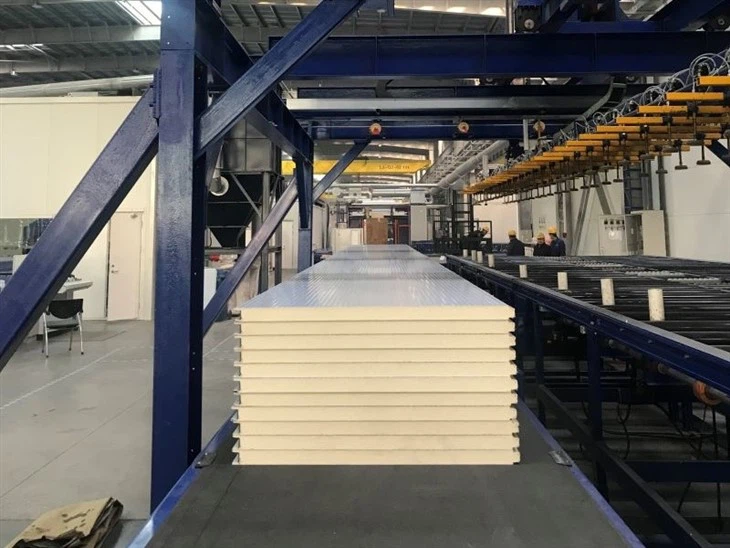

In terms of durability, mineral wool sandwich panels are highly resistant to corrosion, moisture, and pests. The mineral wool core is not affected by mold or mildew, and the outer metal sheets provide additional protection. This ensures a long service life for the panels, even in harsh environmental conditions.
Polyurethane sandwich panels also have good durability. However, they may be more susceptible to damage from moisture and UV radiation. Over time, the polyurethane foam may degrade, especially if it is not properly protected.
Conclusion
In conclusion, both mineral wool sandwich panels and polyurethane sandwich panels have their own advantages and disadvantages. If fire resistance, sound insulation, environmental friendliness, and cost - effectiveness are your main concerns, mineral wool sandwich panels are a great choice. On the other hand, if you prioritize superior thermal insulation and are willing to pay a higher price, polyurethane sandwich panels may be more suitable for your project.
As a supplier of mineral wool sandwich panels, I am confident in the quality and performance of our products. We offer a wide range of Fire Resistance Rock Wool Mineral Wool Sandwich Panel that can meet the diverse needs of different construction projects. If you are interested in our products or have any questions about choosing the right sandwich panel for your project, please feel free to contact us for a detailed discussion and procurement negotiation.
References
- "Building Materials Handbook"
- "Thermal and Acoustic Insulation Materials: Properties and Applications"
- Industry reports on sandwich panel manufacturing and usage