

Hey there! As a sandwich panel supplier, I'm super excited to walk you through the manufacturing process of metal sandwich panels. These panels are pretty amazing and have a wide range of applications, from cold storage to clean rooms. So, let's dive right in!
Step 1: Material Selection
The first and most crucial step in making metal sandwich panels is choosing the right materials. The outer layers, also known as facings, are usually made of metal. Common metals include steel, aluminum, and zinc-coated steel. Steel is super strong and durable, making it a popular choice for heavy-duty applications. Aluminum, on the other hand, is lightweight and corrosion-resistant, perfect for applications where weight is a concern.
The core material is what really gives the sandwich panel its unique properties. There are several types of core materials available, each with its own advantages. Some of the most common core materials include expanded polystyrene (EPS), polyurethane (PU), and mineral wool. EPS is lightweight and has good insulation properties, while PU offers excellent thermal insulation and is also fire-resistant. Mineral wool is a great choice for applications where fire safety is a top priority, as it's non-combustible and has good acoustic insulation properties.
Step 2: Preparing the Facings
Once the materials are selected, the next step is to prepare the facings. The metal sheets are first cleaned to remove any dirt, grease, or other contaminants. This is usually done using a chemical cleaning process, which helps to ensure good adhesion between the facing and the core material.
After cleaning, the metal sheets are often coated with a primer to protect them from corrosion and to improve their paintability. The primer is typically applied using a roller or spray gun. Once the primer is dry, the metal sheets are ready to be cut to the desired size and shape. This is usually done using a shearing machine or a laser cutting machine, depending on the thickness and type of metal.

Step 3: Preparing the Core Material
While the facings are being prepared, the core material is also being readied. If the core material is EPS or PU, it is usually in the form of large blocks or sheets. These blocks or sheets are cut to the desired size and shape using a saw or a cutting machine.
For mineral wool core materials, the wool is typically produced by melting and spinning rocks or minerals into fine fibers. These fibers are then compressed and formed into boards or panels of the desired thickness and density.
Step 4: Assembly
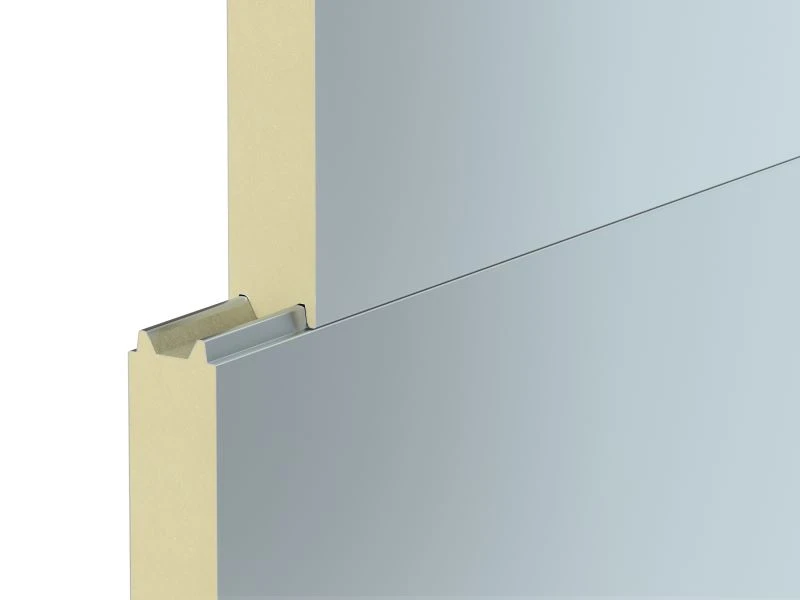
Now comes the exciting part – assembling the sandwich panel! The core material is placed between the two prepared facings, and the three layers are bonded together using an adhesive. The adhesive is usually applied to the facings using a roller or a spray gun, and then the core material is carefully placed on top.
Once the core material is in place, the panel is passed through a press to ensure good adhesion between the layers. The press applies pressure to the panel, which helps to spread the adhesive evenly and to bond the layers together firmly. The pressure and temperature during the pressing process are carefully controlled to ensure optimal bonding.
Step 5: Curing
After the panel is assembled, it needs to be cured to allow the adhesive to fully harden. The curing process usually takes several hours or even days, depending on the type of adhesive used. During the curing process, the panel is kept at a specific temperature and humidity to ensure proper curing.
Step 6: Finishing
Once the panel is cured, it's time for the finishing touches. The edges of the panel are trimmed to ensure a clean and straight edge. This is usually done using a saw or a trimming machine.
The panel may also be painted or coated with a protective finish to improve its appearance and durability. The paint or coating can be applied using a spray gun or a roller, depending on the type of finish and the size of the panel.
Step 7: Quality Control
Before the panels are shipped to customers, they undergo a rigorous quality control process. This includes checking the dimensions, thickness, and density of the panel, as well as the strength and adhesion of the layers. The panels are also tested for thermal insulation, fire resistance, and other important properties.
If any panels fail the quality control tests, they are either reworked or discarded. This ensures that only high-quality panels are delivered to our customers.
Applications of Metal Sandwich Panels
Metal sandwich panels have a wide range of applications, thanks to their excellent properties. One of the most common applications is in Cold Storage Sandwich Panel. These panels are used to construct cold storage rooms, refrigerated trucks, and other cold storage facilities. Their high thermal insulation properties help to keep the cold air inside and the warm air outside, reducing energy consumption and operating costs.
Another important application is in Clean Room Sandwich Panel. Clean rooms are used in industries such as pharmaceuticals, electronics, and food processing, where a high level of cleanliness and control is required. Metal sandwich panels are ideal for clean rooms because they are easy to clean, have good airtightness, and can be designed to meet strict hygiene and safety standards.
Why Choose Our Sandwich Panels?
As a sandwich panel supplier, we take pride in offering high-quality products at competitive prices. Our panels are manufactured using the latest technology and the highest quality materials, ensuring excellent performance and durability.
We also offer a wide range of customization options, so you can get the panels that are exactly right for your specific needs. Whether you need a panel with a specific thickness, color, or insulation value, we can work with you to create the perfect solution.
If you're in the market for metal sandwich panels, I encourage you to get in touch with us. We'd be happy to discuss your requirements and provide you with a free quote. Our team of experts is always on hand to answer any questions you may have and to help you choose the right panels for your project. So, don't hesitate – contact us today and let's start building something great together!
References
- "Handbook of Sandwich Construction" by John W. Gillespie Jr.
- "Metal Building Systems: Design and Construction" by David W. Allen
- Various industry standards and guidelines for sandwich panel manufacturing