

Hey there! As a supplier of PU foam sandwich panels, I often get asked about how these panels perform when it comes to resisting chemical spills. It's a crucial question, especially for industries where chemical exposure is a common occurrence. So, let's dive right in and explore this topic in detail.
What is a PU Foam Sandwich Panel?
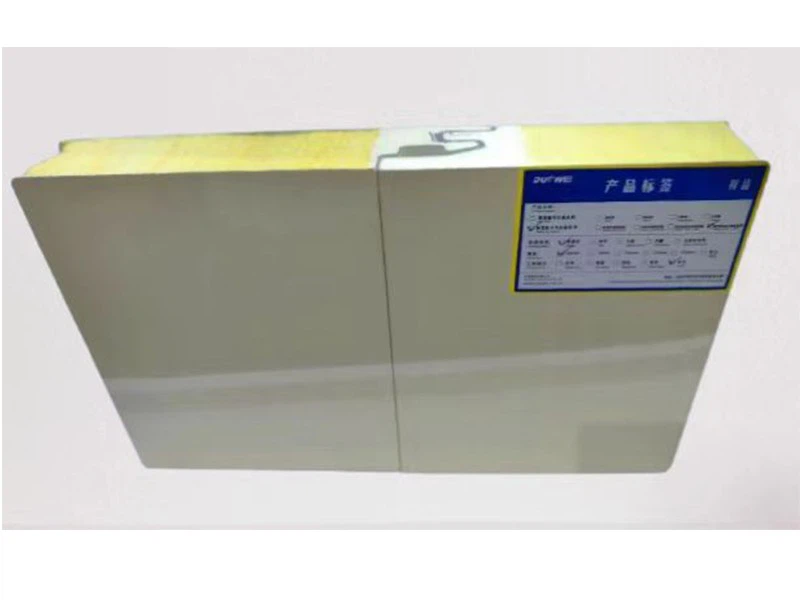
First off, let's quickly go over what a PU foam sandwich panel is. It consists of two outer metal sheets, usually made of steel or aluminum, with a core of polyurethane (PU) foam in between. The foam provides excellent insulation properties, making these panels popular in various applications such as cold storage, industrial buildings, and clean rooms.
Chemical Resistance of PU Foam
The chemical resistance of a PU foam sandwich panel largely depends on the type of PU foam used and the specific chemicals it comes into contact with. Polyurethane foam can have different formulations, each with its own set of chemical resistance characteristics.
Resistance to Common Chemicals
- Acids: In general, PU foam has moderate resistance to weak acids. For example, it can withstand short - term exposure to diluted acetic acid, which is commonly found in some food processing environments. However, strong acids like sulfuric acid or hydrochloric acid can cause significant damage to the foam. The acid can react with the polyurethane, breaking down its chemical structure and leading to degradation, loss of mechanical properties, and reduced insulation performance.
- Bases: PU foam also has some resistance to weak bases. Mild alkaline solutions, such as a dilute sodium bicarbonate solution, may not cause immediate harm. But strong bases like sodium hydroxide can be very corrosive to the foam. They can break the urethane bonds in the polyurethane, causing the foam to soften, swell, and eventually lose its structural integrity.
- Organic Solvents: The resistance of PU foam to organic solvents varies widely. Some solvents, like ethanol, may have a limited effect on the foam if the exposure is brief. However, solvents such as acetone, toluene, and chloroform are highly aggressive towards PU foam. These solvents can dissolve the foam, leading to a complete loss of its physical properties.
Factors Affecting Chemical Resistance
Foam Density
Higher - density PU foams generally have better chemical resistance than lower - density ones. A denser foam has a more compact structure, which can act as a better barrier against chemical penetration. For example, in an industrial setting where there is a risk of chemical spills, using a high - density PU foam sandwich panel can provide an extra layer of protection.
Surface Coating
The outer metal sheets of the sandwich panel can be coated with various materials to enhance chemical resistance. For instance, a galvanized or painted steel sheet can provide a protective layer that prevents direct contact between the chemicals and the PU foam core. Some advanced coatings are specifically designed to resist certain types of chemicals, further improving the panel's overall performance.
Exposure Time and Concentration
The longer the panel is exposed to a chemical and the higher the concentration of the chemical, the more severe the damage will be. Even a chemical that the foam has some resistance to can cause problems if the exposure is prolonged or the concentration is high. For example, a short - term splash of a moderately concentrated acid may not cause much damage, but continuous immersion in the same acid will lead to significant degradation.
Real - World Applications and Performance
In industries such as chemical manufacturing, food processing, and pharmaceuticals, the performance of PU foam sandwich panels in the face of chemical spills is critical.
Chemical Manufacturing
In chemical plants, where a wide range of chemicals are produced and handled, the panels need to be able to withstand accidental spills. For example, if a spill of a mild acid occurs in a storage area, a well - designed PU foam sandwich panel with a suitable surface coating can prevent the acid from reaching the foam core and causing damage. However, in areas where highly corrosive chemicals are used, additional protective measures may be required.
Food Processing
In food processing facilities, there are often cleaning agents and mild acids and bases used for sanitation purposes. PU foam sandwich panels can perform well in these environments as long as the chemicals are within the range of the foam's resistance. For example, the panels can resist the cleaning solutions used to disinfect the production areas without significant degradation.
Comparing with Other Sandwich Panels
When it comes to chemical resistance, it's interesting to compare PU foam sandwich panels with other types of sandwich panels.
Fire Rated Rock Wool Sandwich Panel Mineral Wool with PIR Side Sealing
Rock wool sandwich panels are known for their excellent fire resistance. In terms of chemical resistance, rock wool has a different set of properties compared to PU foam. Rock wool is generally more resistant to strong acids and bases than PU foam. However, it may not provide the same level of insulation as PU foam. So, in an environment where both chemical resistance and insulation are important, the choice between the two will depend on the specific chemical exposure risks and the insulation requirements.
Glass Wool Sandwich Panel for Wall
Glass wool sandwich panels are also popular for their insulation properties. Similar to rock wool, glass wool has good resistance to some chemicals, especially those that do not react with silica, which is the main component of glass wool. However, glass wool can be more brittle than PU foam, and its installation may require more care to avoid damage.
Insulated Metal PIR PU Foam Sandwich Panel
PIR (Polyisocyanurate) foam is a type of modified PU foam. PIR foam sandwich panels often have better fire resistance and, in some cases, improved chemical resistance compared to standard PU foam panels. The PIR foam has a more stable chemical structure, which can provide better protection against certain chemicals.
Conclusion
In conclusion, the performance of a PU foam sandwich panel in terms of resistance to chemical spills is a complex issue. It depends on factors such as the type of foam, the specific chemicals involved, foam density, surface coating, and exposure time and concentration. While PU foam has some resistance to certain chemicals, it may not be suitable for all chemical environments.
If you're in an industry where chemical exposure is a concern and you're considering using PU foam sandwich panels, it's important to carefully assess your specific needs. We, as a supplier, can provide you with detailed information about the chemical resistance of our panels and help you choose the right product for your application.
If you're interested in learning more about our PU foam sandwich panels or have any questions regarding their performance in chemical - prone environments, don't hesitate to reach out. We're here to assist you in making the best choice for your project. Contact us to start a procurement discussion and find the perfect solution for your needs.
References
- "Polyurethane Foams: Chemistry, Technology, and Applications" by D. Klempner and K. C. Frisch
- "Handbook of Sandwich Construction" by J. M. Whitney
- Industry reports on the performance of sandwich panels in chemical - exposed environments